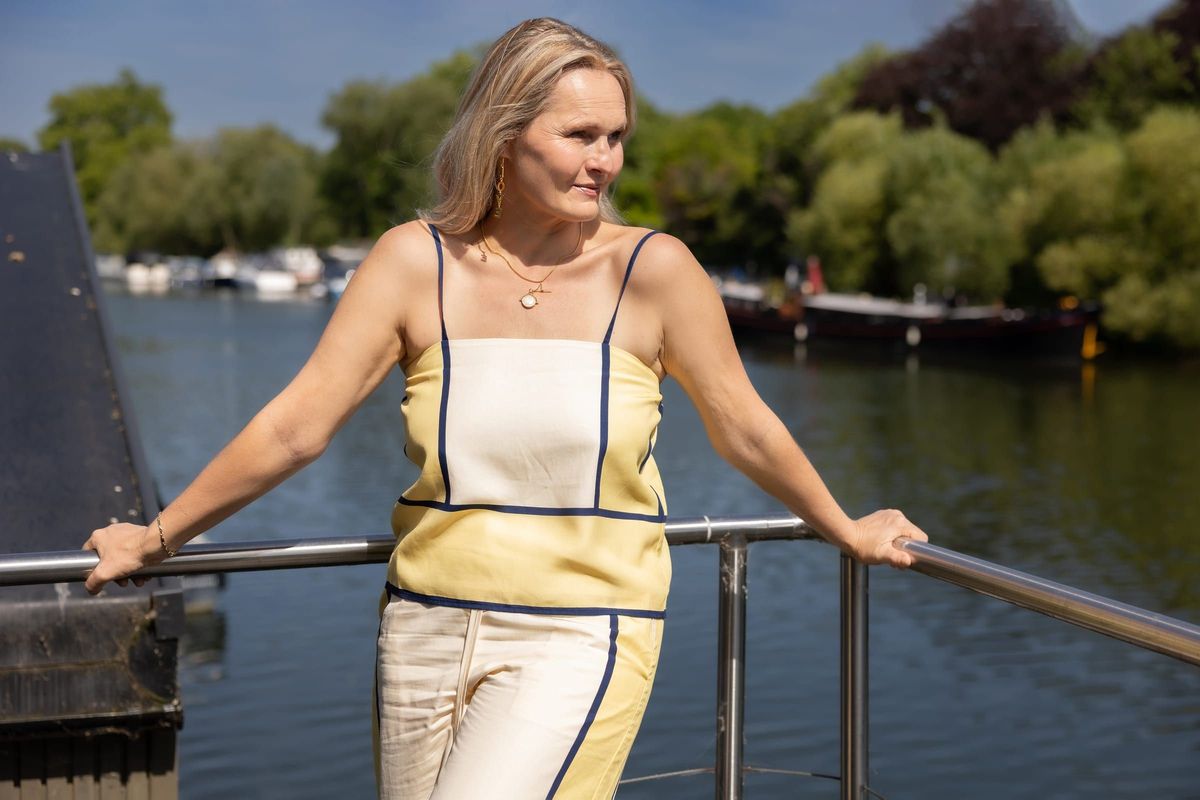
I've spent years learning how not to feel overwhelmed. Regulating. Breathing. Stepping back. Rewriting the patterns. And it's worked. I don't spiral like I used to. From the outside, it probably looks like I've got it handled.
Coping well is a real skill and I would not give back a single thing I learned. The breathing works. The stepping back works. Noticing a pattern before it runs me works.
But a skill you use constantly stops looking like a skill. It starts looking like you.
But I noticed something. I'm not overwhelmed. I'm just still holding everything. The plans. The energy. The emotional temperature of everything around me. Doing it so well that no one would even realise.
Here is what holding looks like in an ordinary week, in case you are not sure whether you do it.
You know what is in the fridge and what is in the diary. You notice the tone of a message before you notice the content of it. You feel a room change when someone walks in, and you adjust before anybody has said anything.
You are 3 steps into solving a problem nobody has mentioned yet.
You remember the appointment. You carry the thing nobody else has thought about. You are the person other people relax around, because you have already taken the weight off the table.
None of that is dramatic. That is rather the point. It does not look like strain. It looks like competence.
And for a moment I thought, well, isn't that the goal? To be able to handle everything?
But it didn't feel like peace. It felt like pressure in a prettier outfit.
I want to be careful here, because there is a version of this that turns into a complaint about doing too much, and that is not what I mean.
The issue is not the amount. It is the grip.
Being settled and not holding are 2 different things, and I had them muddled for years.
Settled means something can arrive and not knock me over. That is nervous system work and it is real.
Not holding means I did not pick it up in the first place.
You can be perfectly settled and still carrying the whole load. Calm, steady, breathing well, and quietly doing the emotional admin for 4 other people.
That is where most of us get stuck. We get good at the carrying and we call it progress.
What people try first is more of what already worked. More breath. A better morning. A tighter system. A rule about phones.
And it helps, for a bit. Then the room you just made gets filled, because room always does. You have built a bigger container, so more goes in it.
The reason it does not hold is that the tools are all about how you carry things, and the question underneath is whether it was yours to carry.
So I've been asking a different question. Not how do I cope better. But where do I get to stop holding so much? Where do I soften? Where do I not step in? Even just by 1 degree.
Because maybe the next level isn't about managing everything more gracefully. Maybe it's about not gripping so tightly in the first place.
The work is smaller and far less satisfying than a new routine. It is 1 situation at a time, and the question is not how do I handle this better. It is: is this mine.
Some of it is. Some of it is genuinely yours and you would not hand it over if somebody offered.
But a surprising amount of it is something you picked up years ago because it was easier than watching someone else struggle with it, and you have held it ever since out of habit.
I said 1 degree and I meant 1 degree.
Not stepping in when you can see exactly how to fix it. Letting the silence after a question belong to the person who was asked.
Saying I don't know, when you don't, instead of going off to find out.
Leaving the thing unsorted for a day to see whether anybody else notices.
Answering the message tomorrow.
These are tiny. They feel irresponsible. They are not. They are the smallest possible test of whether the weight was ever actually required.
What people tend to notice first is not relief. It is discomfort.
The gap where the doing used to be feels like something is wrong. There is an itch to step back in and it is strongest about 20 minutes after you decided not to.
That itch is the information. It tells you the holding was doing something for you as well as for everybody else. Usually it was keeping things predictable.
Later, and it is often weeks rather than days, something quieter turns up. You stop scanning a room on the way in. You notice you have not thought about someone else's day for an hour.
I've been reaching for Clear Quartz when my mind is doing too much. Moonstone when I need to come back to myself. Not as a fix. Just as a moment. Something that quietly says, you don't have to hold all of this.
I am not going to pretend the stone does the work. It gives the hand something to do while the mind decides to let go, and that is not nothing. A small object you have chosen on purpose is a reminder that sits outside your own head.
If that is not your language, use something else. A cup of tea you actually sit down for. 10 minutes by the water. The deliberateness is the thing, not the object.
Where in your life are you still holding more than you need to?
More like this
The problem with being the strong one. https://www.annalouwellness.com/reset-stories/the-problem-with-being-the-strong-one
The crystal guide, which stone is right for you and when. https://www.annalouwellness.com/love-and-relationships/the-crystal-guide-which-stone-is-right-for-you-and-when
The emotional declutter, the conversations you've been avoiding and what they're costing you. https://www.annalouwellness.com/love-and-relationships/the-emotional-declutter-the-conversations-you-ve-been-avoiding-and-what-they-re-
Most of this gets written down first in the Reset Letters, which go out on Substack. If you want the version that arrives before it has been tidied up, it is at resetletters.substack.com.