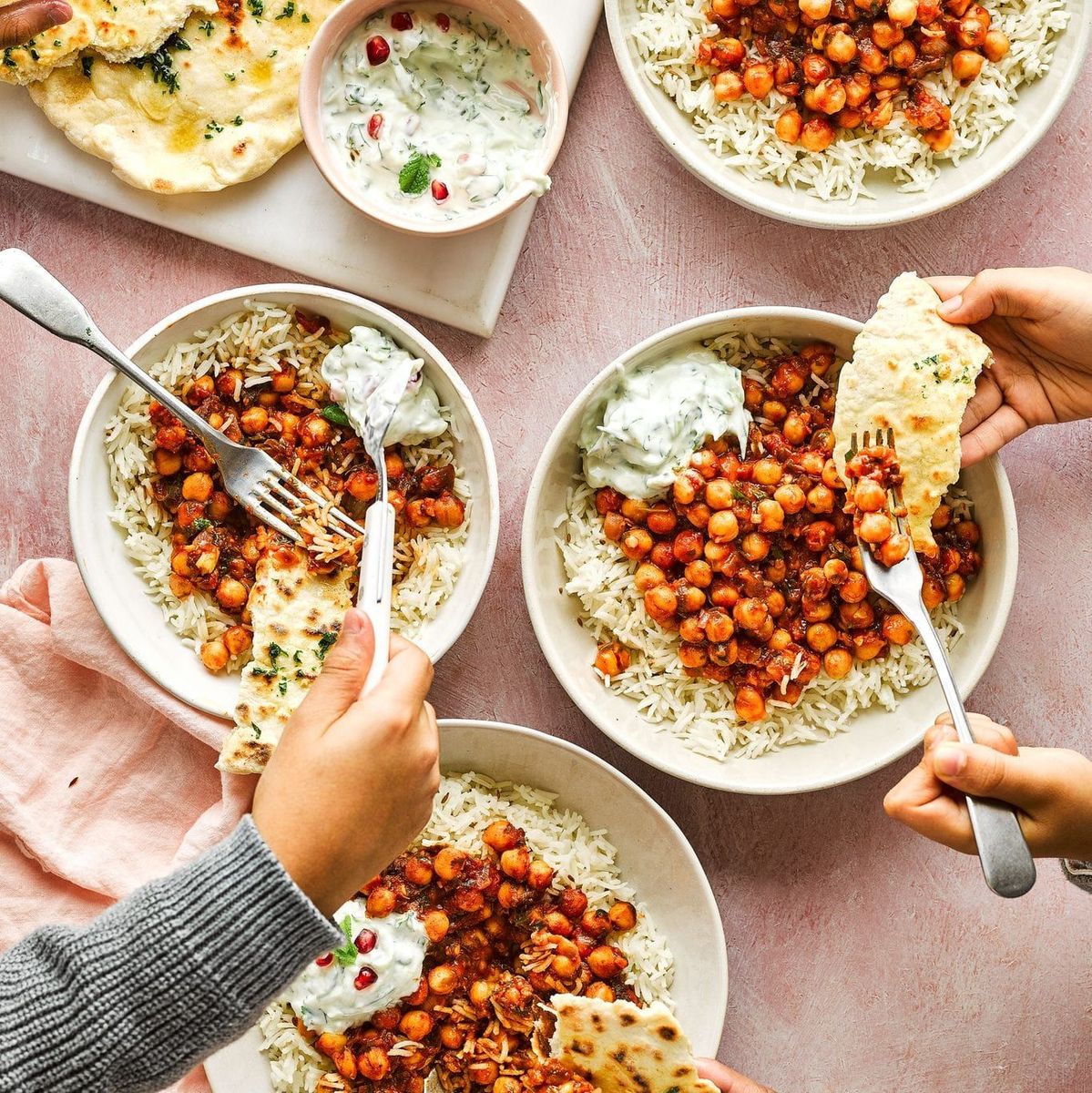
I am not going to pretend I serve organic everything on hand-thrown ceramics. What I serve is: what I can afford, what they will actually eat, and what I can make without losing my mind after a full day of work.
Those 3 tests are not a philosophy. They are the only questions a weekday dinner actually has to answer, and most cooking advice answers 2 of them at best.
Afford is the obvious one. Eat is the one people underestimate, because food nobody finishes is not cheap, it is waste with a receipt. The third test, the one about mental energy, is the one almost nothing written about food takes seriously at all.
The Vitality Kitchen started as a survival mechanism. 3 children. One houseboat galley kitchen. Budget of someone who chose lifestyle over salary.
A survival mechanism is a fair description of it, and I do not mean that dramatically. It means the whole thing was built backwards, from the worst moment of the day rather than the best one.
What the worst moment actually is
It is not the cooking. It is the deciding.
Somewhere between 5 and 6 in the evening, the part of you that makes good decisions has already spent itself on the day. That is the hour when the cupboard looks empty even though it is not, when 4 reasonable options feel like none at all, and when the easiest thing in the room is whatever can be ordered with a thumb.
So the useful question is not what to cook. It is how to arrive at that hour with the decision already made.
Why a week of recipes does not hold
The first thing most of us try is a plan. 7 dinners, written on a Sunday, one for each night. A shopping list built out of the recipes. It looks like control, and for about 3 days it is.
Then a Tuesday goes wrong. Somebody is late, somebody is not hungry, the thing you planned needs something you used on Monday. A plan with no give in it cannot absorb that, so when 1 night slips the week slips, and by Thursday you are deciding at 6pm again in front of a fridge full of parts that do not make a meal.
The other common attempt is the big Sunday cook done properly, 4 or 5 different dishes in 4 or 5 containers. It works once. It takes most of a day, it uses every pan in the kitchen, and almost nobody does it a second time.
Both of them fail for the same reason. They ask for more effort on the day you have energy, in order to save effort on the days you do not, and they assume a week stays where you put it.
Here's what I actually do: batch cook on Sundays. One big pan of something. Freeze half. The other half becomes 3 dinners with different sides. Total cost: usually under £15 for the lot.
The whole thing turns on a single word in there. One pan. Not 5 dishes. One.
Cook once, change the edges
A base is anything that is good on its own and better with something beside it. A pan of it is a single cooking job, a single lot of washing up, and a single decision.
What turns it into 3 different dinners is not the base. It is what sits next to it. Rice one night, a jacket potato the next, bread and something green the night after. Same pan, 3 plates, and nobody at the table reads it as leftovers, because the edges changed.
That is also where the money is. The base takes the ingredients that are cheap all year rather than cheap this week. The sides are small, and the sides are where the variety comes from, so you pay for variety at the edge of the plate instead of in the middle of it.
And freezing half at the start rather than at the end is the part that gets skipped. Half put away while you are still standing there is a dinner you have already cooked for a week you cannot see yet. Half put away after 3 nights of picking at it is a container nobody opens.
What to notice
A few things worth watching, if you want this to be a system rather than a good fortnight.
Freeze in the size you will actually defrost. A 4 portion block is a lovely idea and a terrible Tuesday.
Shop from the cupboard outwards rather than from the recipe inwards. Look at what is already in there, then buy the 3 or 4 things that turn it into something.
Notice when you are cooking for the table and when you are cooking for an audience. They are different jobs, and only the first of them has to happen on a Wednesday.
And notice the relief when it arrives. An evening you do not have to think your way through is a different evening. That is the actual return on a Sunday pan, and it is not measured in money.
The shame around budget cooking is real. I felt it for years. Now I think, if I can feed 3 humans well on this budget and still have mental energy left for my work, that's not failure. That's a life skill.
Shame is mostly a comparison problem. It turns up when you measure an ordinary Wednesday against a photograph of somebody else's Saturday, and a photograph never had to be eaten, finished, washed up, or afforded again the following week.
A kitchen that works is not a kitchen that performs. It is one that gets 3 children fed and leaves something of you over.
I'll share the actual recipes. No performance. Just what we eat.
More like this
The houseboat interiors that cost almost nothing.
Building a daily practice that you'll actually do, including the times you won't.
The quiet cost of coping so well
I write the Reset Letters in much the same register as this, the ordinary end of a week with nothing staged. They are at resetletters.substack.com.